All posts by Paul

I am in to this profession since the dawn of my childhood, a passionate writer but now I get some buck too.. I welcome all the beginners and the old hands to come and join us..

Tips to Manage Stress and Anxiety in Pets

If your pet gets anxious when you are leaving your house. There is a reason. And more and more pet guardians are finally understanding that their cats and dogs are not acting out. They’re just stressed.

Fireworks, separation, and grooming visits. Even a simple vacuum session can trigger a spiral. And here’s the real kicker: Well-meaning advice from the internet often makes it worse. Crate training? Might backfire. Essential oils? Might be a waste.

But there’s a much better way. And this guide will break down exactly how to calm your pet’s anxiety. With science-backed tools. Small daily tweaks. And expert strategies even vets use.

Understanding Stress and Anxiety in Pets: Why It Matters

Stress can have a big effect on how your pet learns. React. And connect with you. When the stress is chronic, it chips away at their well-being. Which makes them more reactive. Harder to train and can cause behavioral problems.

For dogs, stress may look like barking nonstop. Or destroying furniture when you leave your house. For cats. It’s often hiding behind furniture. Aggression. Or house soiling that owners misread as defiance.

But here’s the part many miss: stress in pets is often invisible until it isn’t. You might not notice it until it’s already affecting their sleep, appetite, or even vet visits.

According to the AAHA behavior guidelines, Something as subtle as clinic lighting or flooring can heighten a pet’s fear response.

That’s why understanding the early signs and making it small. Consistent adjustments at home are the first real step to solving the problem. It not only improves your pet’s quality of life. But also because it makes every moment you spend together easier. Smoother and more rewarding.

Most Common Signs of Stress and Anxiety in Pets

The most common signs of anxiety in dogs are visible when they start pacing as you reach to grab your home keys. They may start drooling excessively, start hiding, or even start chewing destructively.

Some dogs start “shadowing”. That means they start following you from room to room.

On the cat’s side, their anxiety actions are more subtle. You can notice their anxiety when they start hiding in the closet. Or when they flatten their ears when approached. They also start over-grooming or start soiling outside of their litter box.

The ASPCA study found that pets started chewing doors or urinating 15 minutes after their owners left the house. They said that they are not doing that to seek attention. Rather, they’re panicking.

One of the biggest mistakes that pet owners make is that they assume the pet will “grow out of it” or that more cuddles will fix everything. However, anxiety is not fixed through affection. It’s fixed when pets feel safe during unpredictable moments. And how confident they are when navigating them.

This is one of the reasons why quick fixes rarely work. If your pet feels unsafe, their brain stays in survival mode. To help them ease their anxiety, you can help them build safety through small, repeatable habits. Things like leaving them alone for shorter periods and creating a predictable routine. As you do these actions, over time, your pet learns that alone time ends safely.
What Causes Anxiety in Pets? Common Triggers to Watch For

You may notice your dog trembling during thunderstorms. Or your cat vanishes every time guests arrive. The biggest stress predictors? Separation from you. These often happen when there are loud noises. Especially fireworks or construction work. And during visits to vet clinics or grooming tables.

Dogs start developing separation anxiety when they sense changes in routine. Like going back to the office post-pandemic. For cats, the anxiety often stems from a lack of control over their environment.

According to AAFP’s Feline Guidelines, cats thrive on choice, vertical space, and private spots. Without that, stress builds.

The real challenge appears when some owners unknowingly make anxiety worse. Like ignoring a dog’s separation anxiety for too long. Which can make their panic attacks worse. Or punishing a cat who’s soiled outside the litter box. Can deepen their fear.

Understanding these triggers helps you shift from reacting to preventing. That’s how you create long-term calm.

5 Tips to Manage Stress and Anxiety in Pets

Every strategy when made part of the day gives the best results. Below we have 5 tips that can help reduce your pet’s anxiety as soon as you implement them.

Create Safe Zones

A consistent and cozy retreat can make your pet feel much more grounded. You can introduce things like a crate cat condo. Or set a soft bed in a quiet corner of your home. To drown external sounds, you can also introduce fans or a white noise machine alongside.

Train Alone time Gradually

Make your dog chew a stuffed toy for 2 to 5 minutes a day. Then gradually start increasing the time. For cats, you can toss treats before leaving the house to build positive associations and avoid dramatic goodbyes or greetings.

Add Enrichment Daily

Licking, sniffing, and foraging may look like fun. But they can help in lowering their heart rate and redirecting their nervous energies. For dogs, you can use snuffle mats, puzzle toys, or even frozen DIY food packs. For cats, you can switch between new toys or add vertical spaces.

Use Vetted Tools (Skeptically)

Compression vests like ThunderShirt can help a ton in reducing your pet’s anxiety during storms. Pheromone diffusers have a low risk, but the effects can be different for every pet. Some pet owners have shown that medications like Fluoxetine or clomipramine, which are FDA-approved helped in severe cases.

Partner with Your Vet Early

Getting a vet partner early can help you be aware of any underlying medical causes instantly. Which can help you make plans before things get bad.

Try each of these tips one by one. Don’t expect that changing one toy will solve everything for you. Over time, you will start building trust with your pet.

How Professional Training or Therapy Can Help

You may see no progress even after trying different things. And that’s when professional help can come to the rescue.

Certified trainers use desensitization and counterconditioning (DS/CC). These methods and strategies can help the pet stay calm when exposed to triggers. Veterinary behaviorists may suggest medications like SSRIs or Fluoxetine if the anxiety gets severe. Or even antidepressants like trazodone before storms or vet visits.

You can also learn to desensitize your pet inside your home. Or seek a professional and trained groomer. A groomer with a certification is a great signal that your provider knows how to work with anxious pets. If you want, you can also enroll in a recognized online grooming certification for dogs, which can teach you to handle your pet’s anxiety yourself with more confidence and calm.

Final Thoughts

Your pet’s anxiety is not bad behaviour. And it’s not your fault either. You just need to reach out for help.

And with the right mix of environment tweaks, clear routines, and expert support, you can solve your problem with compassion.

Do keep in mind that taking action early is non-negotiable. Pets don’t just start getting less anxious over time. Though they can start getting calmer as you keep following the best practices, like those mentioned in the above guide.

Whether you’re trying to manage your pet’s firework panic attacks. Or simply want to leave the house without a meltdown. There are vets, trainers, and even communities that are made to help people like you.




India Makes History: The Categories of Blind Cricket behind the Success of the Women T20 World Cup.

An Effective Roadmap to B1, B2, and B3 Categories that characterize Blind Cricket in the entire world.

The Indian Women Blind Cricket Team made history and won the first-ever Women T20 World Cup Blind in Colombo and beat Nepal by seven wickets in the final. This is a great triumph, which has attracted the attention of the world not just to the performance of the team but also to the unique and systematic classification system that controls the blind cricket. These are B1, B2, and B3, which guarantee fairness, inclusiveness, and balanced team make-up in any international blind cricket tourism.

The world blind cricket council (WBCC) and the international blind sports federation (IBSA) define the categories of blind cricket. Such classifications are identified on two important parameters, which include Visual Acuity (how clearly one can see) and Field of Vision (how much of the surrounding ones can be seen by the individual).

B1 Group: Completely Blind Gamers

The B1 group comprises those players who have the lowest level of visual ability. These are players who lack light perception, in other words they are unable to see anything. Others will be able to feel light and dark but not to differentiate forms or movements.

Due to their total sight loss B1 players play with exception rules:

  • B1 plays can also be considered as a double run.
  • They mostly need to be verbally instructed in fielding.
  • They do not need a blindfold to do batting as they already do not have visual input.
  • The spirit of blind cricket is B1 players-they demonstrate such skills, perception, and reflexes although they have lost their sight.

B2 Group: Semi-Blind Gamblers

  • B2 players possess restricted vision, which is in use. Their vision has been said to appear through a thick fog.
  • Visual Acuity: Up to 2/60
  • Field of Vision: Up to 5 degrees

They are able to view shapes or objects that are very close to them but cannot determine the movement of objects that are at a distance. B2 musicians will play with the help of sound cues, communication, and rhythm. On the field, they play a great role in batting, bowling and fielding using adapted skills which fit their visual field.

B3: Low Vision Players

  • The visual capacity of B3 players is the greatest of the blind categories of cricket.
  • Visual Acuity: Up to 6/60
  • Field of Vision: Up to 20 degrees

Their vision is much better than that of B1 and B2 players and therefore they can bat, bowl and field but in a manner that is nearer to normal cricket- albeit with restrictions. They are important in the strategic game because their visibility is better, which brings stability and balance to the team structure.

The measurement of Vision in Blind Cricket

There are two measurements of the category of a player:

  • Visual Acuity: Visual acuity (e.g. to see a 6 metre object half a metre in distance)
  • Field of Vision: This is the field of vision in which the eye can observe the environment.
  • These guarantee proper classification, and equal gameplay to all the players.

Team Composition Rules

In order to be fair, every blind cricket team should consist of:

  • 4 players from B1
  • 3 players from B2
  • 4 players from B3

This combination makes all categories of the visual contribution balanced and makes the sport inclusive without compromising the integrity of the competitions.

Conclusion

The historic win of India in the Women T20 World Cup of the blind is not just an event that glorifies the best in sporting ability but also gives credit to the power, stamina, and skill of the blind people in sports. The knowledge about the B1, B2, and B3 categories makes us realize the extent to which blind cricket is structured, inclusive, and competitive. These categories enable the different levels of vision in the athletes to be able to play, compete, and achieve the greatest heights in the international arenas.

The fact that blind cricket exists is a manifestation of human will, flexibility and cooperation. The victorious 51 moment by India is something to be proud of that motivates millions of people and creates a precedent in the sphere of para-sports.

Find How to Stay Motivated on Your Fitness Journey

Wanting to keep motivated to achieve your fitness goals but failed many times? Well, I’ve a solution. Staying motivated throughout your fitness journey is super easy. You just need to get pumped, energize yourself daily. You can do this by picturing yourself by getting a body, which you have been dreaming about for so long.

Moreover, after couple of weeks pass and this rush? Gone. That alarm goes off at 6 AM for your morning jog, and once you hit snooze then it becomes your habit. Results in you’re right back where you started.

This is where everyone is struggling. Staying motivated is the hardest part in the whole fitness journey from which everyone going through.

But here’s some good news though. Motivation doesn’t need to be some weird mysterious thing you either have or don’t. There are real ways to keep yourself going.

Why Motivation Matters So Much

You could have the best workout plan ever created. A fancy gym membership. All the latest gear. But no motivation? None of that matters. You’ll find excuses. You’ll skip days. Eventually? You quit.

It fuels your motivation to get up from your comfort zone and keep making efforts with consistency. This is how staying motivated changes your life 360 degrees from your food choices to sleeping habits. No matter how much it is tough, it gives you progressive results.

Your mindset shifts when you’re motivated and become more focused towards your goal. Obstacles quit being longer reason to give up. They become challenges to overcome. Working out stops feeling like punishment.

Things That Kill Your Motivation

Let’s talk about what makes people quit usually. Understanding what trips you up? That helps you avoid it.

The biggest one? Not seeing results fast enough. You’re putting in the work. Eating better. Hitting the gym regularly. Even taking full body lymphatic drainage massage to take your fitness on next level.  Scale barely budges though. That’s when people quit.

And boredom? Total motivation killer. Doing the exact same routine every single day? Gets old fast. Your brain needs variety.

Then there’s time. Work, family, errands, all the other stuff? Finding even 30 minutes feels impossible. Already wiped out? The couch wins every time.

Physical issues mess things up too. Maybe you pull a muscle. Your knee starts acting weird. Next thing you know, you can’t work out like before.

And setting those crazy unrealistic goals? Doesn’t help. Going from zero exercise to planning seven intense workouts a week? That’s not happening. You’ll be burned out within days.

07 Ways to Actually Stay Motivated on Your Fitness Goals

Okay, enough about problems. Let’s get into solutions. Real ones that actually work.

1.    Set Goals You Can Actually Hit

Everyone’s have different fitness goals according to their health and comparing yourself with others is quite unfair for you. So logically, it would be perfect to set your own fitness goals according to your requirements. In addition, goals should be realistic from small level to bigger level so that you can achieve them.

You’ve heard about SMART goals probably. Sounds boring, right? But it works. “I want to get fit”? Useless. “I’ll do 15 pushups in a row by March 1st”? Now this makes goals more practical, achievable and realist that even motivate you.

2.    Make Exercise Part of Your Routine

Know what beats motivation? Habit. When you set your goals into small tasks and perform them on a daily basis they become a part of you routine. It benefits you no longer need to regularly push yourself to motive you.

Schedule workouts like important meetings. Stick them in your calendar. Make them non-negotiable. Over time, it quits being this big decision.

Start small. Mornings don’t work? Try evenings. Or lunch breaks. Even 15 minutes beats nothing.

3.    Pick Activities You Don’t Dread

This seems obvious but people ignore it constantly. Hate running? Why force yourself to run? Life’s way too short for that.

Try different things. Swimming. Dancing. Rock climbing maybe. Kickboxing. Find something that won’t make you miserable.

Switch it up regularly. Lift weights one day. Do yoga the next. Bike ride on weekends. Variety keeps it interesting.

4.    Track What You’re Doing

Writing things down? Powerful. Keep a simple workout log. Note how you felt. Record small victories. Seeing your progress proves your effort is paying off.

And celebrate wins. Did your first real pushup? That’s awesome. Ran a 5K? These moments matter.

5.    Get Other People Involved

Working out solo is fine. But having support changes everything. Tell friends what you’re doing. Join a class. Find someone who’ll check in on you when you slack off.

Hire a professional trainer if you can afford it who can find out what’s your strength and weakness. This bring a huge difference in your fitness plans.

6.    Reward Your Progress

Adults respond to rewards same as kids. Whenever you hit a goal, gift yourself a reward   . Like sneaker, latest smart watch, new bike anything, which you’ve been added in your wish list. Each reward make you highly motivated to get another fav item as a reward.

Just make sure the rewards connect to your progress. Little frequent rewards keep you motivated better than one big thing way down the road.

7.    Remember Your Real Why

Some days are going to suck. That’s reality. Those days? At that time, you need to remind the reason why you started and how much efforts you gave to achieve your fitness. Maybe it wants more energy or you want to feel confident again. Whatever it is, keep that front and center.

Picture yourself getting what you want. Really visualize it. Crossing that finish line. Hitting that strength goal. Just feeling comfortable in your own skin again.

Final Thoughts

Truth about staying motivated? You won’t feel pumped every day. Some workouts will feel amazing. Others will be a struggle. Totally normal.

Goal isn’t perfection. It’s consistency. It’s having tools to pull yourself back on track when you slip up. Because you will slip up.

Fitness isn’t something with an end date. It becomes part of how you live. Some days you’ll kill it. Other days you’ll barely survive your workout. Both count.

What matters? Keep showing up. Set goals that actually make sense. Do stuff you don’t hate. Write down your wins. Lean on people for support.

Proximity in Men and Women Cricket

Perhaps, one of the most significant factors that influence the game in modern international cricket is the size of the playing field. Boundary distance has a direct effect on the patterns of scoring, methods used by players, the variations in bowling and the placement of the field and the level of entertainment in the sport.

The Laws of Cricket do give a minimum and maximum distance between the two boundary lengths however in reality the boundaries employed when playing men and women are usually different. In general, the international cricket of men has a range of boundaries with a range of 70-80 meters, whereas the international matches of women have their boundaries with the range of 60-65 meters.

To be able to explain the existence of this difference, it is necessary to consider the aspects of physiology, competitive balance, expectations of the audience and the development of the sport.

Normal Boundary Distance in Men Cricket

Boundary distances in international cricket among men are also slightly different in this case, depending on the format, and the type of ground. Test matches, One Day Internation (ODIs) as well as Twenty20 Internation matches are all done on grounds where the curators can change the position of the boundary ropes on a match day depending on the size of the square, the position of the pitch and broadcasting provisions. Regardless of these differences, the mean distance of the boundary in men cricket is held at 70 to 80 meters.

This distance guarantees a weight between bat and ball because it requires a great degree of hitting power of fours and sixes. The physical ability, muscle power and bat velocity of male cricketers enable them to consistently hit distances of the ball more than 70 meters long. These dimensions are also trained by bowlers and fielders and thus long boundary clearances are a necessary element in cricket policies of men.

Normal Boundary Distance in Women Cricket

In women cricket, the boundaries tend to be relatively shorter typically ranging between 60-65 meters when the match is international. These limits do not exist universally but are in line with the provisions suggested by the International Cricket Council (ICC) in order to facilitate equal competition.

The naturally endowed power-hitting skills of female players are in contrast to those of male players because of the differences in physiology, mass of muscles, and average bat speed. The sport puts limits at a slightly lower distance which makes sure that well-timed shots are rewarded. This increases the excitement element with more fours and sixes, but does not affect the integrity or competitiveness of the game.

Since women cricket is still developing, the aspect of fitness and technique and technology of the bats has enabled players to strike longer distances than previously, yet the boundaries that are already in place make the game much more interesting to play.

The Reason behind the Availability of the Difference: Physical Strength and Hitting Abilities

The fact that the average physical strength of male and female athletes is distinct is one of the main reasons that lead to the differences in the boundary size. Men normally produce more bat swing velocity and create the greater impact of the cricket ball. A boundary of 75-80 meters, therefore, means that hitting a six is not a trivial accomplishment that needs strength and timing. When bat-ball impact force is expected to be lower as in women in cricket, long boundaries would considerably decrease the number of boundaries hit. This would reduce the scoring rates, raise the dot-ball pressure and change the dynamics of the match in a manner that may render the sport less entertaining to the audience. Their reduced boundaries will offset physiological disparities and help the game played by women to have a healthy balance between bat and ball.

Assuring Competitive Balance and Fair Play

The administrators of cricket endeavor to provide a scenario that promotes quality competitive cricket. Even the most skillful female hitters would have found it difficult to clear the rope regularly that in the case of women matches, boundaries were the same as in the case of men. This would drive the game to the defensive mode, with bowlers having an over-dominance.

To prevent this lopsis, the size of fields is modified in such a way that both genders demonstrate their abilities in such areas as slog-sweeping, lofted drives, pick-ups and power hits. This is crucial both to ensure the players are confident and to keep global standings of the game but also to remain competitive to keep spectators in the long run.

Improving Entertainment Value

The contemporary game of cricket, particularly the limited-overs games such as ODIs and T20s, are strongly impacted by the expectations of the audience. Viewers love games with a lot of scoring, six-hitting displays and pressure on the bowlers all the time. The existence of shorter boundaries in cricket among women makes boundaries, as a result of well-played shots, more likely than bare power. Designed in this way, the players are encouraged to be more aggressive, creative in making the stroke and creating more dramatic swings of momentum during the matches. Boundary distances have been of great advantages to women leagues and tournaments like the Women Premier League (WPL), the Hundred Women Competition and Women Big Bash League (WBBL) which play aggressive and attacking brand of cricket.

Development of Women Cricket and Future Projections

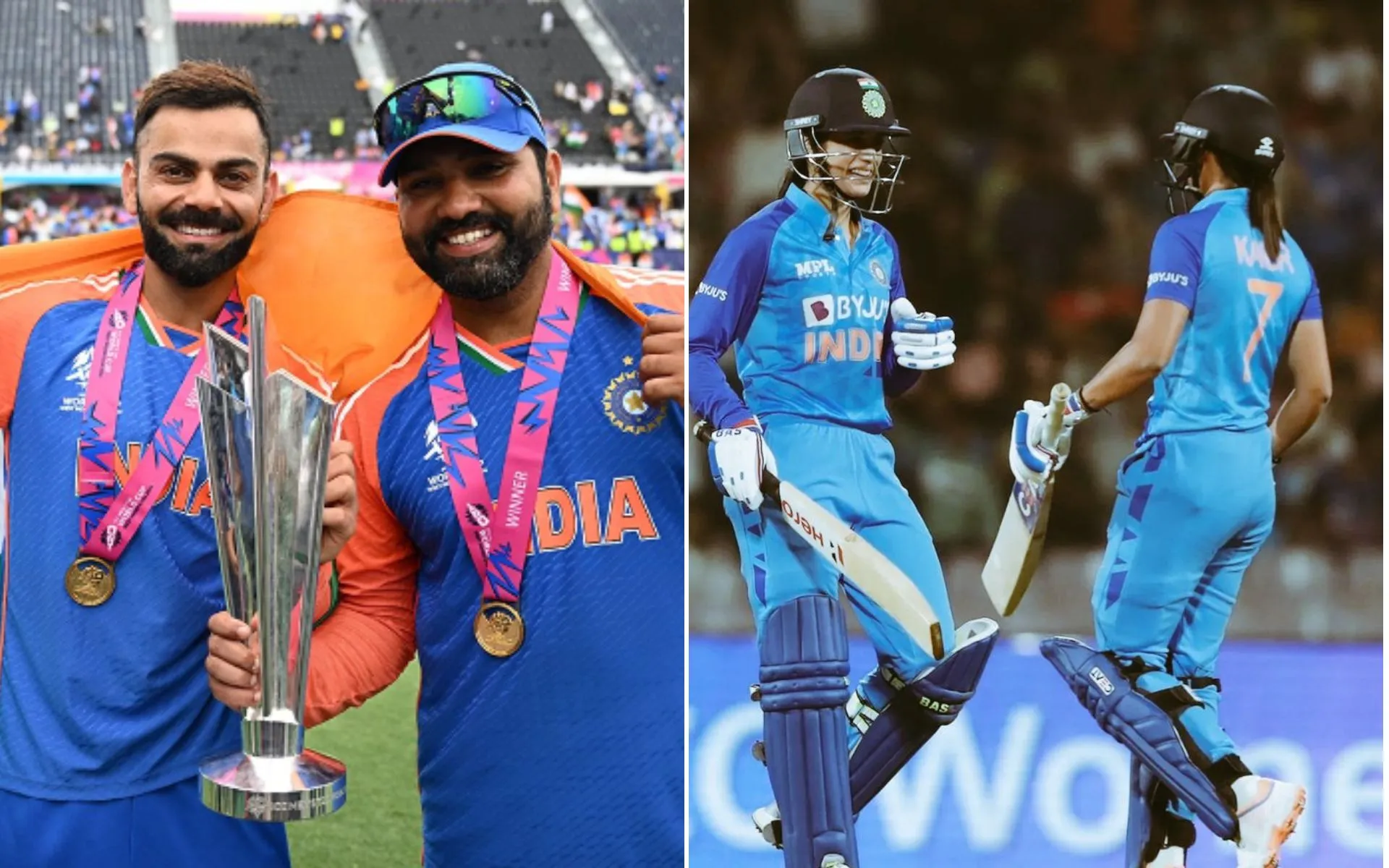
Power in hitting has significantly been enhanced as the women cricket keeps growing. Women such as Alyssa Healy, Harmanpreet Kaur, Sophie Devine and Deandra Dottin have been shown to not only clear longer boundaries. This has been evolved by better fitness programs, new training methodologies, lighter and stronger bats as well as exposure to franchise T20 tournaments.

In the long run, there will be a tendency of boundary distance creeping up in parts of top-level women matches, but the essence will still be maintaining balance. The ICC continuously checks the tendencies of performance and the opinion of the spectators, and changes the guidelines only when it enhances the development of the game.

Ground Conditions/Match Logistics Role

Practical considerations also have an effect on boundary distances. A lot of stadiums in other parts of the world have permanent seats or advertisement boards adjacent to the periphery of the playing field, restricting the size of boundaries. TV matches also use camera towers, LED sponsor boards and hospitality structures. Thus, the curators occasionally shift the boundary rope either inwards or outwards as necessary by safety and visibility concerns.

These modifications can be applied to both men and women version of cricket, however, because the limits of women version are already smaller in the planning, the end result is the same as recommended by ICC.

Keeping the Viewers Engaged on the Formats

The lesser boundaries in the female version of the game of cricket play a massive role in keeping the audience entertained in terms of Test, ODI and T20. Scoring in Test cricket may be languid and boundaries serve to keep the flow and excitement alive. In T20 Cricket, the big hits are the main component of the game. The reduced boundaries also guarantee the players to give the students the kind of batting explosion that fans want in the current game of cricket.

Fan vs. AC Power Consumption: Which is Better for Your Indian Home?

In India, where summers can feel like you have stepped into an oven, staying cool is a must. But as electricity bill go up and energy conservation becomes a major concern then the question of fan and AC selection becomes very difficult. Let’s simplify the power consumption of fans and ACs, based on the context of India and how you can make a choice that fits your home best.


Fans: The Budget-Friendly Choice


Fans are a novelty in every home of India, ranging from the crowded cities like Mumbai to the quiet villages in Rajasthan. Be it a ceiling fan in your bedroom or a pedestal fan in the living roo,m they’re cheap and easy to operate. A standard fan ceiling uses 15-100 watts, depending on the size and speed of the fan. For instance, a standard 50-watt ceiling fan used for 8 hours ( typical use at night time) consumes approximately 0.4kWh. That’s a mere ₹ 2.80 per night at the average rate of ₹ 7 per kWh in India!


Portable fans (table, or stand) require roughly 20-100 watts; smaller ones are about 30 watts. A 40-watt fan used for 8 hours consumes 0.32 kWh, which is approximately ₹2.24 spent every night. Fans are super energy-efficient, they can save up to 50% more power compared to the older fans especially newer models with BLDC (Brushless DC) motors.


ACs: The Cool but Costly Option


Air conditioners are a revolution to overcome India’s heat, particularly in urban areas such as Delhi or Chennai. But they have a more powerful appetite for power. A 1-ton window AC (approx. 10,000 BTU) draws 500-1,500 watts, most commonly 900 watts. It consumes 7.2 kWh running it for 8 hours, which costs approximately ₹50.40 per night. Whilst Split ACs or inverter ACs may be a little bit more, they are still very power-consuming.


For larger homes, central AC systems (common in offices or big houses) guzzle 2,000-5,000 watts. An 8-hour run at 3,500 watts uses 28 kWh, which could set you back ₹196 nightly! Inverter ACs, popular in India for their energy-saving tech, adjust power usage based on room temperature, but they’re still far more expensive to run than fans.


What’s Best for You?


In India, where electricity costs can pinch the wallet, fans are the go-to for most homes. They’re cheaper to buy (₹1,500-₹5,000 for a good fan vs. ₹25,000+ for an AC) and cost pennies to run. Fans work great in well-ventilated spaces or during milder months like October or February. However, in peak summer (hello, 40°C days!), an AC might be worth the splurge for a good night’s sleep.


To save more, opt for energy-efficient appliances. Look for 5-star rated ACs or BLDC fans, which cut down power use. Also, use ACs smartly—set the thermostat to 24-26°C and run them for shorter periods. Fans and ACs both have their place, but your choice depends on your budget, room size, and how much heat you can handle!


#ac #fan #summer #accost #cheapac #lowbudgetac

1 2 29