Category Archives: others

Sundarban Wildlife Photography Tour: Complete Guide for Beginners and Serious Photographers

Photography tours in the Sundarban are an unusual experience for photographers to get to photograph wildlife, birds, mangroves and amazing waterways in one of the most unique areas in the world in India. The Sundarbans offers a distinctive method of wildlife photography as opposed to the traditional approach of visiting a wildlife reserve.

From a first-time user of a telephoto lens to an expert who wants a dedicated wildlife photography experience, preparation can make a huge difference.

Select the correct camera and lens.Use the appropriate camera and lens.

In the Sundarbans, a camera that performs well with continuous shooting and has strong high ISO performance, with good autofocus is helpful. Full frame or crop-sensor cameras may be used and work well.

A telephoto lens is especially significant as wildlife need to be photographed from a safe distance. For mammals and larger birds a lens in the 100-500mm or similar range will offer flexibility.

For landscapes, environmental portraits, and photos of animals in their mangrove habitat, a wide lens may be helpful as well.

Carry extra batteries and memory cards. This can lead to much more photography than anticipated after spending a few hours on the water!

Learn when it is best to shoot:Know the best shooting hours:

Early morning and late afternoon are particularly nice times to shoot since the light may be less intense than it is during the “hottest” hours of the day.

Early morning boat trips can also happen to coincide with active wildlife and bird activity. Strong overhead sunshine can provide challenging exposure and contrast throughout the day.

But the wildlife does not cooperate with a photographer’s schedule. Be prepared to take pictures at any moment in time that you think is interesting.

Boat Positioning Matters

Your boat is your camera platform in the Sundarban. The final image can thus greatly be affected by positioning.

Follow your boat crew and guide’s instructions when animals are seen. A good position, if conditions allow, may have a better line of sight and not disturb the animal.

Do not make abrupt movements or make unnecessary noises. After the boat is set, it’s sometimes better to wait for things to come to the right person than to keep on moving it around.

Photographing Birds

Photography of bird species is a crucial aspect of a wildlife photography tour to the Sundarbans. Waterways and forest edges may be visited by kingfishers, herons, egrets, raptors and other wetland birds.

When photographing birds in motion, or birds in flight, use a fast shutter speed. Continuous autofocus and burst shooting can help in case a bird flies unexpectedly.

When possible, concentrate as closely as possible on the bird’s eye. Don’t only look for close-up portraits. The inclusion of the mangrove, river or mudflat can convey a better message regarding the bird’s habitat.

Taking Mammal and Reptile photographs

The spotted deer, wild boar, crocodiles and monitor lizards are wonderful subjects for photography. While the Royal Bengal Tiger is a dream sighting for many photographers, it is never the only goal to have.

Wildlife may suddenly show up, and vanish just as fast. Be ready with your camera and don’t spend too much time adjusting the camera if an animal is seen.

In the Sundarbans, the story is so much about the environment, including the enclosing mangroves that make the area so special, that environmental photographs can be particularly powerful.

Be aware of the possibility of changing weather conditions

The weather can make a huge difference in the photography experience. Exposure and equipment can be influenced by humidity, bright sunshine, cloud cover and occasional rain.

Protect camera and lens from moisture and splashes. A waterproof bag or rain cover will come in handy during boat trips.

A microfiber cloth can also be used to remove moisture from equipment when moving from one condition to another.

Be patient—it’s your most important equipment!

Patience is key to wildlife photos in the Sundarban. These times may be long and quiet, but then followed a few seconds of exciting activity.

Take time to watch the forest closely, rather than always looking for a tiger. Watch for animals along the riverbank or birds reacting to something nearby or vegetation moving.

Taking the time to sit quietly can lead to more natural and authentic photographs.

Practice ethical use of photographic techniques when shooting wildlife.

Photography should always be done responsibly before it’s captured perfectly. Never attempt to attract an animal, make loud noises, feed wildlife or pressure the boat crew to move dangerously close.

Stay back and obey forest officials, guides and boat crew members.

Objectives should be to record wildlife, rather than altering their natural behavior.

What’s the point of a Multi-Day Photography Tour?

A quick trip to the Sundarban may be worth it and then some for some, but for serious photographers, spending several days in the region is well worth it.

A longer Sundarban wildlife photography tour offers more opportunities to see the various tides, lighting and waterways, as well as more opportunities to see more wildlife. It also gives the photographer the opportunity to stop and take their time over a picture, rather than being rushed into taking everything in a single safari.

A multi-day photography tour can be particularly useful for photographers looking to create a series of photographs, rather than just a handful of holiday snapshots.

Record the history of the Sundarbans

Great Sundarban photographing is not just about animal photographing. It’s about the bond between wildlife, mangroves, rivers, tides, birds, boats and the people who inhabit this extraordinary ecosystem.

With proper gear, preparation, patience and a commitment to ethical wildlife photography, a photography tour, for the beginner, can help develop his abilities and for the advanced photographer, provide the time and opportunities necessary to produce a meaningful visual story.
Tips to Manage Stress and Anxiety in Pets

If your pet gets anxious when you are leaving your house. There is a reason. And more and more pet guardians are finally understanding that their cats and dogs are not acting out. They’re just stressed.

Fireworks, separation, and grooming visits. Even a simple vacuum session can trigger a spiral. And here’s the real kicker: Well-meaning advice from the internet often makes it worse. Crate training? Might backfire. Essential oils? Might be a waste.

But there’s a much better way. And this guide will break down exactly how to calm your pet’s anxiety. With science-backed tools. Small daily tweaks. And expert strategies even vets use.

Understanding Stress and Anxiety in Pets: Why It Matters

Stress can have a big effect on how your pet learns. React. And connect with you. When the stress is chronic, it chips away at their well-being. Which makes them more reactive. Harder to train and can cause behavioral problems.

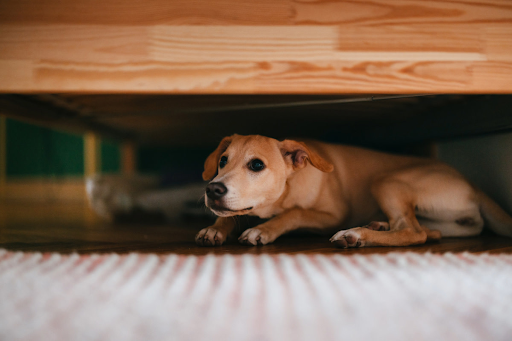
For dogs, stress may look like barking nonstop. Or destroying furniture when you leave your house. For cats. It’s often hiding behind furniture. Aggression. Or house soiling that owners misread as defiance.

But here’s the part many miss: stress in pets is often invisible until it isn’t. You might not notice it until it’s already affecting their sleep, appetite, or even vet visits.

According to the AAHA behavior guidelines, Something as subtle as clinic lighting or flooring can heighten a pet’s fear response.

That’s why understanding the early signs and making it small. Consistent adjustments at home are the first real step to solving the problem. It not only improves your pet’s quality of life. But also because it makes every moment you spend together easier. Smoother and more rewarding.

Most Common Signs of Stress and Anxiety in Pets

The most common signs of anxiety in dogs are visible when they start pacing as you reach to grab your home keys. They may start drooling excessively, start hiding, or even start chewing destructively.

Some dogs start “shadowing”. That means they start following you from room to room.

On the cat’s side, their anxiety actions are more subtle. You can notice their anxiety when they start hiding in the closet. Or when they flatten their ears when approached. They also start over-grooming or start soiling outside of their litter box.

The ASPCA study found that pets started chewing doors or urinating 15 minutes after their owners left the house. They said that they are not doing that to seek attention. Rather, they’re panicking.

One of the biggest mistakes that pet owners make is that they assume the pet will “grow out of it” or that more cuddles will fix everything. However, anxiety is not fixed through affection. It’s fixed when pets feel safe during unpredictable moments. And how confident they are when navigating them.

This is one of the reasons why quick fixes rarely work. If your pet feels unsafe, their brain stays in survival mode. To help them ease their anxiety, you can help them build safety through small, repeatable habits. Things like leaving them alone for shorter periods and creating a predictable routine. As you do these actions, over time, your pet learns that alone time ends safely.

What Causes Anxiety in Pets? Common Triggers to Watch For

You may notice your dog trembling during thunderstorms. Or your cat vanishes every time guests arrive. The biggest stress predictors? Separation from you. These often happen when there are loud noises. Especially fireworks or construction work. And during visits to vet clinics or grooming tables.

Dogs start developing separation anxiety when they sense changes in routine. Like going back to the office post-pandemic. For cats, the anxiety often stems from a lack of control over their environment.

According to AAFP’s Feline Guidelines, cats thrive on choice, vertical space, and private spots. Without that, stress builds.

The real challenge appears when some owners unknowingly make anxiety worse. Like ignoring a dog’s separation anxiety for too long. Which can make their panic attacks worse. Or punishing a cat who’s soiled outside the litter box. Can deepen their fear.

Understanding these triggers helps you shift from reacting to preventing. That’s how you create long-term calm.

5 Tips to Manage Stress and Anxiety in Pets

Every strategy when made part of the day gives the best results. Below we have 5 tips that can help reduce your pet’s anxiety as soon as you implement them.

Create Safe Zones

A consistent and cozy retreat can make your pet feel much more grounded. You can introduce things like a crate cat condo. Or set a soft bed in a quiet corner of your home. To drown external sounds, you can also introduce fans or a white noise machine alongside.

Train Alone time Gradually

Make your dog chew a stuffed toy for 2 to 5 minutes a day. Then gradually start increasing the time. For cats, you can toss treats before leaving the house to build positive associations and avoid dramatic goodbyes or greetings.

Add Enrichment Daily

Licking, sniffing, and foraging may look like fun. But they can help in lowering their heart rate and redirecting their nervous energies. For dogs, you can use snuffle mats, puzzle toys, or even frozen DIY food packs. For cats, you can switch between new toys or add vertical spaces.

Use Vetted Tools (Skeptically)

Compression vests like ThunderShirt can help a ton in reducing your pet’s anxiety during storms. Pheromone diffusers have a low risk, but the effects can be different for every pet. Some pet owners have shown that medications like Fluoxetine or clomipramine, which are FDA-approved helped in severe cases.

Partner with Your Vet Early

Getting a vet partner early can help you be aware of any underlying medical causes instantly. Which can help you make plans before things get bad.

Try each of these tips one by one. Don’t expect that changing one toy will solve everything for you. Over time, you will start building trust with your pet.

How Professional Training or Therapy Can Help

You may see no progress even after trying different things. And that’s when professional help can come to the rescue.

Certified trainers use desensitization and counterconditioning (DS/CC). These methods and strategies can help the pet stay calm when exposed to triggers. Veterinary behaviorists may suggest medications like SSRIs or Fluoxetine if the anxiety gets severe. Or even antidepressants like trazodone before storms or vet visits.

You can also learn to desensitize your pet inside your home. Or seek a professional and trained groomer. A groomer with a certification is a great signal that your provider knows how to work with anxious pets. If you want, you can also enroll in a recognized online grooming certification for dogs, which can teach you to handle your pet’s anxiety yourself with more confidence and calm.

Final Thoughts

Your pet’s anxiety is not bad behaviour. And it’s not your fault either. You just need to reach out for help.

And with the right mix of environment tweaks, clear routines, and expert support, you can solve your problem with compassion.

Do keep in mind that taking action early is non-negotiable. Pets don’t just start getting less anxious over time. Though they can start getting calmer as you keep following the best practices, like those mentioned in the above guide.

Whether you’re trying to manage your pet’s firework panic attacks. Or simply want to leave the house without a meltdown. There are vets, trainers, and even communities that are made to help people like you.


Fan vs. AC Power Consumption: Which is Better for Your Indian Home?

In India, where summers can feel like you have stepped into an oven, staying cool is a must. But as electricity bill go up and energy conservation becomes a major concern then the question of fan and AC selection becomes very difficult. Let’s simplify the power consumption of fans and ACs, based on the context of India and how you can make a choice that fits your home best.


Fans: The Budget-Friendly Choice


Fans are a novelty in every home of India, ranging from the crowded cities like Mumbai to the quiet villages in Rajasthan. Be it a ceiling fan in your bedroom or a pedestal fan in the living roo,m they’re cheap and easy to operate. A standard fan ceiling uses 15-100 watts, depending on the size and speed of the fan. For instance, a standard 50-watt ceiling fan used for 8 hours ( typical use at night time) consumes approximately 0.4kWh. That’s a mere ₹ 2.80 per night at the average rate of ₹ 7 per kWh in India!


Portable fans (table, or stand) require roughly 20-100 watts; smaller ones are about 30 watts. A 40-watt fan used for 8 hours consumes 0.32 kWh, which is approximately ₹2.24 spent every night. Fans are super energy-efficient, they can save up to 50% more power compared to the older fans especially newer models with BLDC (Brushless DC) motors.


ACs: The Cool but Costly Option


Air conditioners are a revolution to overcome India’s heat, particularly in urban areas such as Delhi or Chennai. But they have a more powerful appetite for power. A 1-ton window AC (approx. 10,000 BTU) draws 500-1,500 watts, most commonly 900 watts. It consumes 7.2 kWh running it for 8 hours, which costs approximately ₹50.40 per night. Whilst Split ACs or inverter ACs may be a little bit more, they are still very power-consuming.


For larger homes, central AC systems (common in offices or big houses) guzzle 2,000-5,000 watts. An 8-hour run at 3,500 watts uses 28 kWh, which could set you back ₹196 nightly! Inverter ACs, popular in India for their energy-saving tech, adjust power usage based on room temperature, but they’re still far more expensive to run than fans.


What’s Best for You?


In India, where electricity costs can pinch the wallet, fans are the go-to for most homes. They’re cheaper to buy (₹1,500-₹5,000 for a good fan vs. ₹25,000+ for an AC) and cost pennies to run. Fans work great in well-ventilated spaces or during milder months like October or February. However, in peak summer (hello, 40°C days!), an AC might be worth the splurge for a good night’s sleep.


To save more, opt for energy-efficient appliances. Look for 5-star rated ACs or BLDC fans, which cut down power use. Also, use ACs smartly—set the thermostat to 24-26°C and run them for shorter periods. Fans and ACs both have their place, but your choice depends on your budget, room size, and how much heat you can handle!


#ac #fan #summer #accost #cheapac #lowbudgetac