

Hacked By Badc0de
May 10, 2013
0

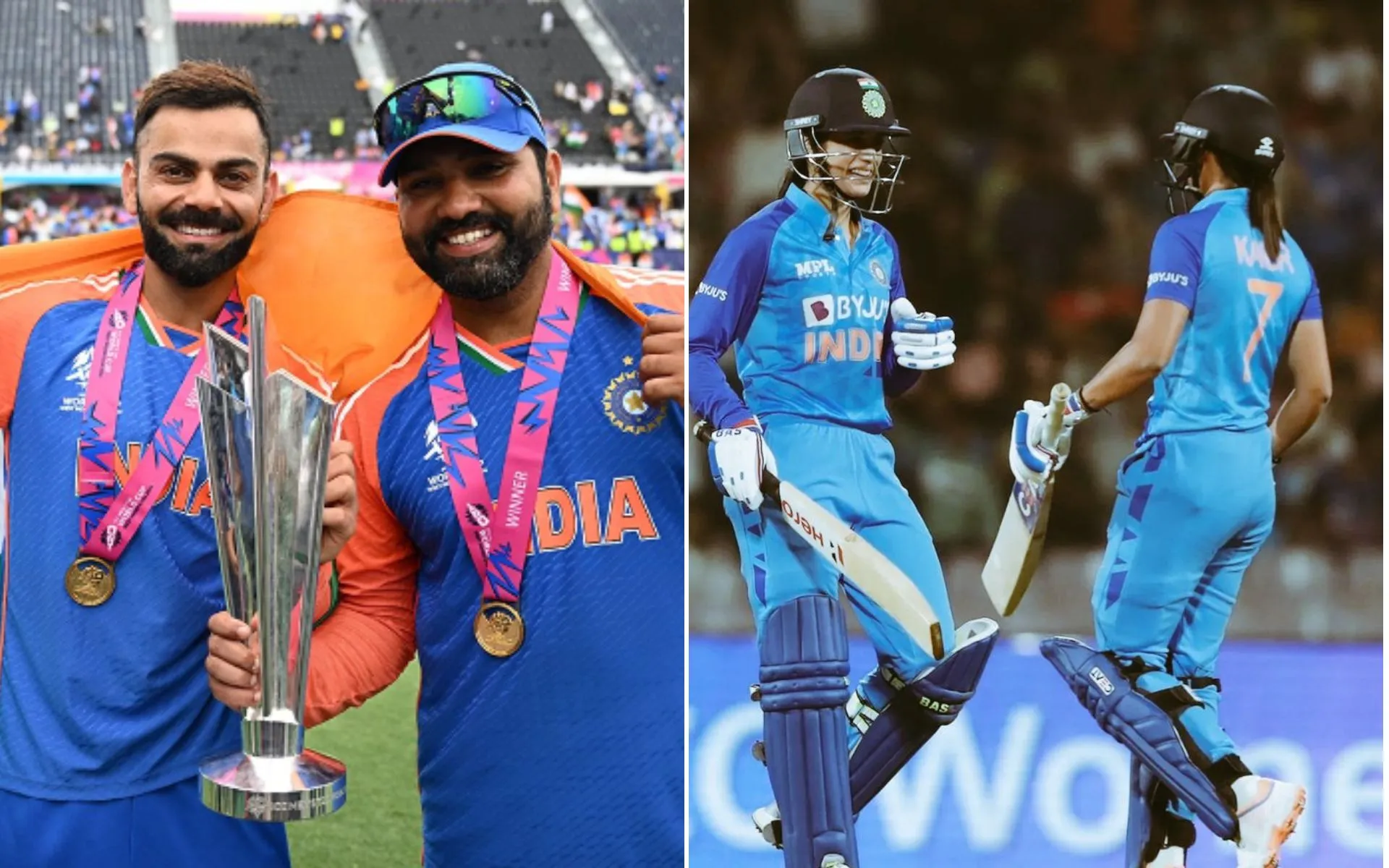
Perhaps, one of the most significant factors that influence the game in modern international cricket is the size of the playing field. Boundary distance has a direct effect on the patterns of scoring, methods used by players, the variations in bowling and the placement of the field and the level of entertainment in the sport.
The Laws of Cricket do give a minimum and maximum distance between the two boundary lengths however in reality the boundaries employed when playing men and women are usually different. In general, the international cricket of men has a range of boundaries with a range of 70-80 meters, whereas the international matches of women have their boundaries with the range of 60-65 meters.
To be able to explain the existence of this difference, it is necessary to consider the aspects of physiology, competitive balance, expectations of the audience and the development of the sport.
Boundary distances in international cricket among men are also slightly different in this case, depending on the format, and the type of ground. Test matches, One Day Internation (ODIs) as well as Twenty20 Internation matches are all done on grounds where the curators can change the position of the boundary ropes on a match day depending on the size of the square, the position of the pitch and broadcasting provisions. Regardless of these differences, the mean distance of the boundary in men cricket is held at 70 to 80 meters.
This distance guarantees a weight between bat and ball because it requires a great degree of hitting power of fours and sixes. The physical ability, muscle power and bat velocity of male cricketers enable them to consistently hit distances of the ball more than 70 meters long. These dimensions are also trained by bowlers and fielders and thus long boundary clearances are a necessary element in cricket policies of men.
In women cricket, the boundaries tend to be relatively shorter typically ranging between 60-65 meters when the match is international. These limits do not exist universally but are in line with the provisions suggested by the International Cricket Council (ICC) in order to facilitate equal competition.
The naturally endowed power-hitting skills of female players are in contrast to those of male players because of the differences in physiology, mass of muscles, and average bat speed. The sport puts limits at a slightly lower distance which makes sure that well-timed shots are rewarded. This increases the excitement element with more fours and sixes, but does not affect the integrity or competitiveness of the game.
Since women cricket is still developing, the aspect of fitness and technique and technology of the bats has enabled players to strike longer distances than previously, yet the boundaries that are already in place make the game much more interesting to play.
The fact that the average physical strength of male and female athletes is distinct is one of the main reasons that lead to the differences in the boundary size. Men normally produce more bat swing velocity and create the greater impact of the cricket ball. A boundary of 75-80 meters, therefore, means that hitting a six is not a trivial accomplishment that needs strength and timing. When bat-ball impact force is expected to be lower as in women in cricket, long boundaries would considerably decrease the number of boundaries hit. This would reduce the scoring rates, raise the dot-ball pressure and change the dynamics of the match in a manner that may render the sport less entertaining to the audience. Their reduced boundaries will offset physiological disparities and help the game played by women to have a healthy balance between bat and ball.
The administrators of cricket endeavor to provide a scenario that promotes quality competitive cricket. Even the most skillful female hitters would have found it difficult to clear the rope regularly that in the case of women matches, boundaries were the same as in the case of men. This would drive the game to the defensive mode, with bowlers having an over-dominance.
To prevent this lopsis, the size of fields is modified in such a way that both genders demonstrate their abilities in such areas as slog-sweeping, lofted drives, pick-ups and power hits. This is crucial both to ensure the players are confident and to keep global standings of the game but also to remain competitive to keep spectators in the long run.
The contemporary game of cricket, particularly the limited-overs games such as ODIs and T20s, are strongly impacted by the expectations of the audience. Viewers love games with a lot of scoring, six-hitting displays and pressure on the bowlers all the time. The existence of shorter boundaries in cricket among women makes boundaries, as a result of well-played shots, more likely than bare power. Designed in this way, the players are encouraged to be more aggressive, creative in making the stroke and creating more dramatic swings of momentum during the matches. Boundary distances have been of great advantages to women leagues and tournaments like the Women Premier League (WPL), the Hundred Women Competition and Women Big Bash League (WBBL) which play aggressive and attacking brand of cricket.
Power in hitting has significantly been enhanced as the women cricket keeps growing. Women such as Alyssa Healy, Harmanpreet Kaur, Sophie Devine and Deandra Dottin have been shown to not only clear longer boundaries. This has been evolved by better fitness programs, new training methodologies, lighter and stronger bats as well as exposure to franchise T20 tournaments.
In the long run, there will be a tendency of boundary distance creeping up in parts of top-level women matches, but the essence will still be maintaining balance. The ICC continuously checks the tendencies of performance and the opinion of the spectators, and changes the guidelines only when it enhances the development of the game.
Practical considerations also have an effect on boundary distances. A lot of stadiums in other parts of the world have permanent seats or advertisement boards adjacent to the periphery of the playing field, restricting the size of boundaries. TV matches also use camera towers, LED sponsor boards and hospitality structures. Thus, the curators occasionally shift the boundary rope either inwards or outwards as necessary by safety and visibility concerns.
These modifications can be applied to both men and women version of cricket, however, because the limits of women version are already smaller in the planning, the end result is the same as recommended by ICC.
The lesser boundaries in the female version of the game of cricket play a massive role in keeping the audience entertained in terms of Test, ODI and T20. Scoring in Test cricket may be languid and boundaries serve to keep the flow and excitement alive. In T20 Cricket, the big hits are the main component of the game. The reduced boundaries also guarantee the players to give the students the kind of batting explosion that fans want in the current game of cricket.

Follow below instructions to register/login and to update individual details :
*The link which you want to put in the site for promotion.
**At least one is must.
May 10, 2013
May 29, 2013
May 29, 2013
May 29, 2013
May 29, 2013
May 29, 2013


