An Effective Roadmap to B1, B2, and B3 Categories that characterize Blind Cricket in the entire world.
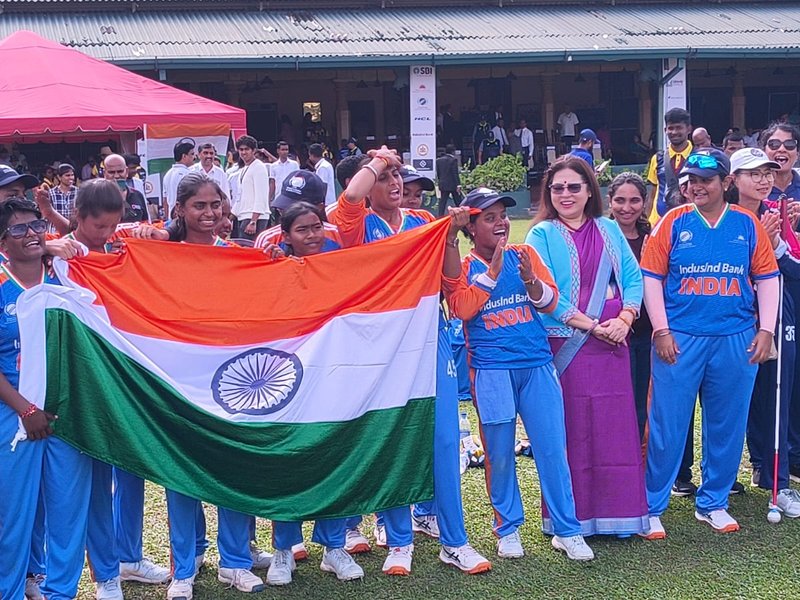
The Indian Women Blind Cricket Team made history and won the first-ever Women T20 World Cup Blind in Colombo and beat Nepal by seven wickets in the final. This is a great triumph, which has attracted the attention of the world not just to the performance of the team but also to the unique and systematic classification system that controls the blind cricket. These are B1, B2, and B3, which guarantee fairness, inclusiveness, and balanced team make-up in any international blind cricket tourism.
The world blind cricket council (WBCC) and the international blind sports federation (IBSA) define the categories of blind cricket. Such classifications are identified on two important parameters, which include Visual Acuity (how clearly one can see) and Field of Vision (how much of the surrounding ones can be seen by the individual).
B1 Group: Completely Blind Gamers
The B1 group comprises those players who have the lowest level of visual ability. These are players who lack light perception, in other words they are unable to see anything. Others will be able to feel light and dark but not to differentiate forms or movements.
Due to their total sight loss B1 players play with exception rules:
- B1 plays can also be considered as a double run.
- They mostly need to be verbally instructed in fielding.
- They do not need a blindfold to do batting as they already do not have visual input.
- The spirit of blind cricket is B1 players-they demonstrate such skills, perception, and reflexes although they have lost their sight.
B2 Group: Semi-Blind Gamblers
- B2 players possess restricted vision, which is in use. Their vision has been said to appear through a thick fog.
- Visual Acuity: Up to 2/60
- Field of Vision: Up to 5 degrees
They are able to view shapes or objects that are very close to them but cannot determine the movement of objects that are at a distance. B2 musicians will play with the help of sound cues, communication, and rhythm. On the field, they play a great role in batting, bowling and fielding using adapted skills which fit their visual field.
B3: Low Vision Players
- The visual capacity of B3 players is the greatest of the blind categories of cricket.
- Visual Acuity: Up to 6/60
- Field of Vision: Up to 20 degrees
Their vision is much better than that of B1 and B2 players and therefore they can bat, bowl and field but in a manner that is nearer to normal cricket- albeit with restrictions. They are important in the strategic game because their visibility is better, which brings stability and balance to the team structure.
The measurement of Vision in Blind Cricket
There are two measurements of the category of a player:
- Visual Acuity: Visual acuity (e.g. to see a 6 metre object half a metre in distance)
- Field of Vision: This is the field of vision in which the eye can observe the environment.
- These guarantee proper classification, and equal gameplay to all the players.
Team Composition Rules
In order to be fair, every blind cricket team should consist of:
- 4 players from B1
- 3 players from B2
- 4 players from B3
This combination makes all categories of the visual contribution balanced and makes the sport inclusive without compromising the integrity of the competitions.
Conclusion
The historic win of India in the Women T20 World Cup of the blind is not just an event that glorifies the best in sporting ability but also gives credit to the power, stamina, and skill of the blind people in sports. The knowledge about the B1, B2, and B3 categories makes us realize the extent to which blind cricket is structured, inclusive, and competitive. These categories enable the different levels of vision in the athletes to be able to play, compete, and achieve the greatest heights in the international arenas.
The fact that blind cricket exists is a manifestation of human will, flexibility and cooperation. The victorious 51 moment by India is something to be proud of that motivates millions of people and creates a precedent in the sphere of para-sports.